

When people ask, “How much nicotine is in a cigarette?” they are often surprised to learn that the answer is not as straightforward as it seems. Nicotine is one of the primary substances found in tobacco products, and it plays a major role in why cigarettes are so widely used around the world. However, the amount of nicotine contained in a cigarette and the amount actually absorbed by the body are two different things.
Many smokers and non-smokers alike assume that every cigarette contains the same level of nicotine. In reality, nicotine levels can vary significantly depending on the brand, tobacco blend, cigarette design, and smoking behavior. Understanding these differences is important for anyone interested in learning more about tobacco products and their effects.
Nicotine is naturally present in tobacco plants and acts as a stimulant. Once inhaled, it reaches the brain very quickly, which contributes to its strong impact on users. This rapid delivery system is one reason cigarettes have remained popular for decades despite increasing awareness about smoking-related health concerns.
What Is Nicotine?
Nicotine is a naturally occurring chemical compound found primarily in tobacco plants. It belongs to a group of substances known as alkaloids and is responsible for many of the effects associated with tobacco use. Although nicotine is naturally derived, it is also the component that contributes to dependence on tobacco products.
When nicotine enters the body, it interacts with receptors in the brain that influence the release of certain neurotransmitters. These chemical messengers affect mood, attention, concentration, and feelings of reward. Because of these effects, nicotine can create a cycle of repeated use.
The substance is colorless in its pure form but becomes brown when exposed to air. Over time, nicotine has become one of the most studied compounds in tobacco due to its role in smoking behavior and its influence on the human body.
How Much Nicotine Is Actually in a Cigarette?
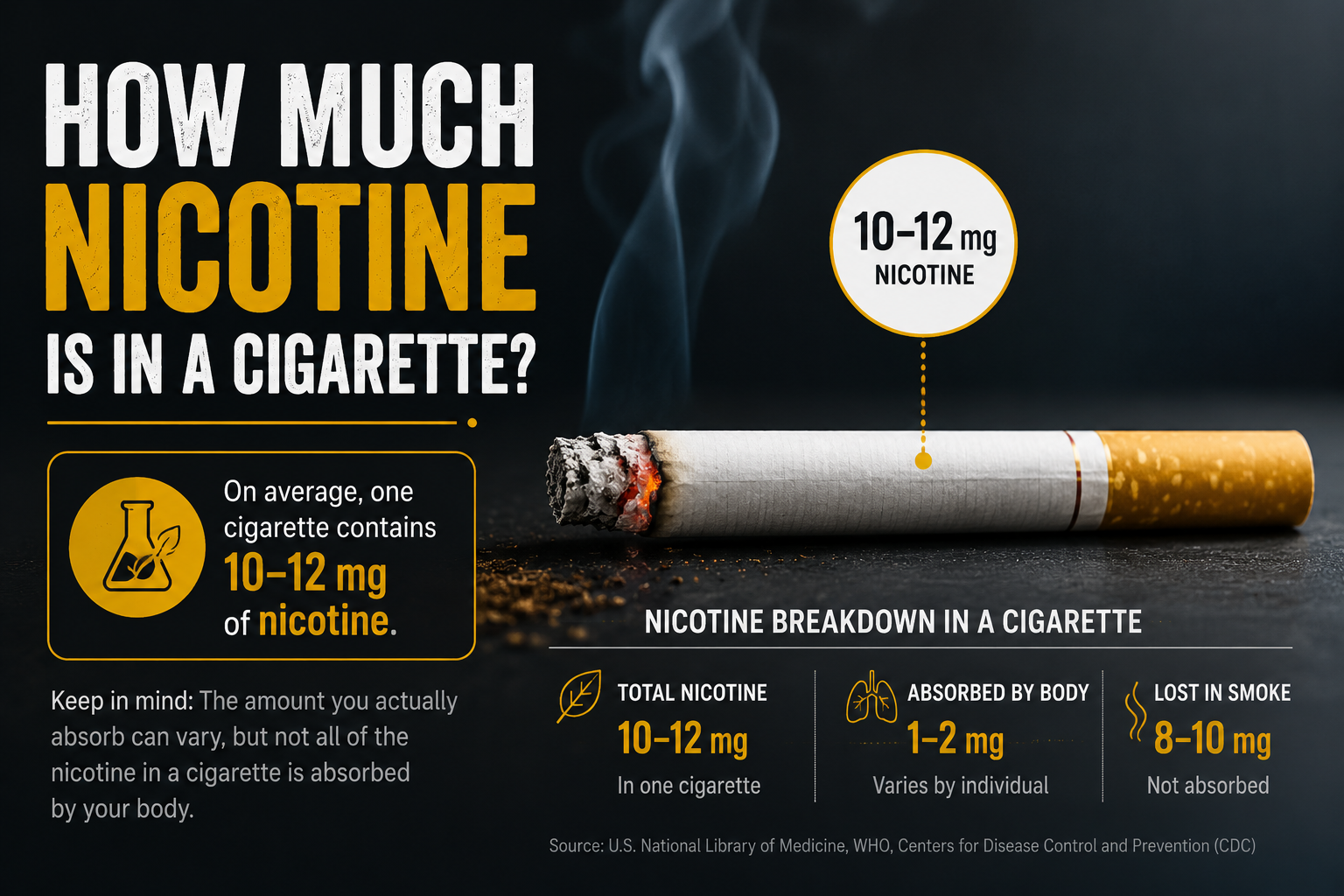
A typical cigarette generally contains between 8 and 20 milligrams of nicotine. However, this does not mean a smoker absorbs all of that nicotine while smoking. The actual amount that enters the bloodstream is usually much lower.
On average, a smoker absorbs approximately 1 to 2 milligrams of nicotine from a single cigarette. The exact amount depends on several factors, including how deeply the person inhales, how frequently they puff, and the design of the cigarette itself.
This distinction is important because the nicotine content listed for a cigarette refers to the amount present in the tobacco, not necessarily the amount delivered to the user. As a result, two cigarettes with similar nicotine content may provide different levels of nicotine exposure depending on how they are smoked.
Why Nicotine Levels Vary Between Cigarettes
Not all cigarettes are created equal. Different manufacturers use varying tobacco blends, production methods, and filter designs, all of which can influence nicotine content.
The type of tobacco used plays a major role in determining nicotine levels. Certain tobacco varieties naturally contain higher concentrations of nicotine than others. Manufacturers may combine multiple tobacco types to create specific flavor profiles and nicotine strengths.
Cigarette construction can also affect nicotine delivery. Factors such as filter ventilation, paper composition, and tobacco density influence how much nicotine reaches the smoker. Even cigarettes marketed as “light” or “low tar” may not necessarily result in substantially lower nicotine intake because smoking behaviors often compensate for these design differences.
How the Body Absorbs Nicotine
One of the reasons nicotine has such a noticeable effect is the speed at which it enters the bloodstream. When cigarette smoke is inhaled, nicotine travels through the lungs and is rapidly absorbed into the blood.
Within seconds, nicotine reaches the brain. This quick delivery creates immediate effects that many users recognize, such as increased alertness, heightened focus, and temporary feelings of relaxation or satisfaction.
The body’s response to nicotine varies from person to person. Factors such as age, body composition, smoking history, and individual sensitivity can influence how strongly someone experiences its effects. Regular users often develop a tolerance, meaning they may require repeated exposure to achieve the same sensations over time.
Factors That Influence Nicotine Intake
Although a cigarette may contain a certain amount of nicotine, the amount absorbed can vary significantly based on smoking habits. The way a person smokes often has a greater impact than the nicotine content itself.
For example, deeper inhalation generally increases nicotine absorption. Taking more frequent puffs or smoking a cigarette more quickly can also result in greater nicotine intake. Some smokers unconsciously adjust their behavior to achieve desired nicotine levels.
Environmental factors may play a role as well. Stress, mood, and social situations can influence smoking patterns, which in turn affect nicotine exposure. This variability explains why nicotine intake differs even among people who smoke the same brand of cigarettes.
Comparing Nicotine Levels in Different Tobacco Products
Cigarettes are not the only source of nicotine. Various tobacco and nicotine-containing products deliver the substance in different amounts and through different methods.
Cigars, for example, often contain substantially more tobacco than cigarettes. Depending on size and type, a single cigar may contain significantly higher amounts of nicotine. However, actual absorption varies based on usage patterns.
Smokeless tobacco products, nicotine pouches, and certain alternative nicotine products can also deliver nicotine through different routes. Each product category has unique characteristics that influence how much nicotine enters the body and how quickly it takes effect.
Understanding these differences helps consumers make more informed decisions when comparing nicotine-containing products.
Common Misconceptions About Nicotine
There are many misconceptions surrounding nicotine. One common myth is that nicotine itself is responsible for all smoking-related health risks. In reality, cigarette smoke contains thousands of chemical compounds, many of which contribute to the health concerns associated with smoking.
Another misconception is that low-nicotine cigarettes eliminate nicotine exposure entirely. While some products may contain lower levels, users often adjust their smoking behavior in ways that maintain similar nicotine intake.
People also sometimes assume that occasional smoking eliminates nicotine exposure. Even infrequent smoking can result in nicotine absorption, although the amount and frequency may differ from regular smoking patterns.
Accurate information is essential for understanding how nicotine functions and how it affects users.
Why Understanding Nicotine Content Matters
Learning about nicotine content can help people better understand tobacco products and the factors that influence smoking behavior. Knowledge about nicotine levels allows consumers to interpret product information more accurately.
For researchers and public health professionals, nicotine content remains an important area of study. Understanding how nicotine is delivered and absorbed helps inform educational initiatives and regulatory discussions.
Consumers also benefit from understanding the distinction between nicotine content and nicotine absorption. Recognizing this difference can clarify many misconceptions about cigarettes and other nicotine-containing products.
Greater awareness encourages more informed conversations about tobacco use, product design, and individual choices.
The Relationship Between Nicotine and Smoking Behavior
Nicotine plays a significant role in shaping smoking habits. Because it reaches the brain quickly, many smokers develop routines and behaviors associated with nicotine delivery.
Over time, individuals may come to associate smoking with certain activities, environments, or emotions. These behavioral patterns can become deeply ingrained, making smoking a complex habit influenced by both physical and psychological factors.
Researchers continue to study the relationship between nicotine and behavior to better understand why smoking patterns vary among individuals. This ongoing research contributes to a broader understanding of tobacco use and its effects on society.
Conclusion
So, how much nicotine is in a cigarette? The answer depends on whether you’re referring to the nicotine contained within the cigarette or the amount actually absorbed by the smoker. Most cigarettes contain between 8 and 20 milligrams of nicotine, while the average smoker typically absorbs about 1 to 2 milligrams per cigarette.
Nicotine content can vary based on tobacco type, cigarette design, and manufacturing methods. At the same time, individual smoking behaviors have a significant influence on actual nicotine intake. Understanding these factors provides a clearer picture of how cigarettes deliver nicotine and why experiences can differ from person to person.
As public interest in nicotine and tobacco products continues to grow, accurate information remains essential. Whether you’re researching tobacco products, studying nicotine’s effects, or simply curious about the topic, understanding nicotine content is an important step toward making informed decisions and gaining a deeper understanding of how cigarettes work.
You May Also Read: Best Sushi Near Me