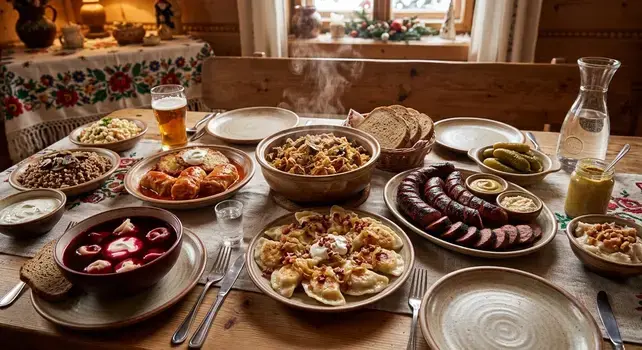
You want to explore Polish cuisine but feel lost in a sea of unfamiliar names and recipes. Scrolling through endless food blogs leaves you more confused than hungry. This guide cuts through the noise and breaks down the most beloved polish foods so you can cook, order, and enjoy them with real confidence.
What Are the Most Popular Polish Foods?
Poland sits at the crossroads of Eastern and Central Europe, and its kitchen reflects centuries of trade, migration, and rural tradition. The most popular polish foods share a few common threads: hearty portions, preserved ingredients, and bold, savory flavors that stick to your ribs.
On almost all lists, Pierogi, Bigos, Kielbasa, and Čurek are at the top.These dishes started as peasant meals designed to fuel long winters and hard farm labor. Today, they appear on restaurant menus from Warsaw to Chicago.
| Dish | Category | Main Ingredients | Prep Time | Difficulty |
| Pierogi | Dumplings | Flour, potato, cheese, meat | 90 min | Medium |
| Bigos | Stew | Sauerkraut, sausage, pork | 3–4 hrs | Easy |
| Kielbasa | Sausage | Pork, garlic, marjoram | 2 hrs | Medium |
| Żurek | Soup | Rye starter, egg, sausage | 60 min | Easy |
| Gołąbki | Rolls | Cabbage, rice, ground meat | 2 hrs | Medium |
| Pączki | Pastry | Flour, yeast, jam, sugar | 3 hrs | Hard |
Each dish tells a story about the region it came from and the family that passed it down.
Why Do Polish Foods Feature So Much Meat and Cabbage?
Poland’s climate shaped its pantry. Long, cold winters made fresh vegetables scarce for months, so families turned to preservation methods like fermentation, smoking, and curing.
Cabbage ferments into sauerkraut, which lasts through the entire winter. Pork cures into kielbasa and smoked ham. Root vegetables like beets, carrots, and potatoes store well in cellars.
These practical choices became cultural staples. When you eat a plate of bigos or a bowl of kapuśniak (cabbage soup), you taste centuries of survival turned into tradition.
The Polish Ministry of Agriculture notes that pork remains the most consumed meat in the country, accounting for over 40% of total meat production (gov.pl).
What Is Pierogi and Why Is It the Star of Polish Foods?
Unleavened dough is used to make pierogi, which are stuffed dumplings.You boil them, then often pan-fry them in butter until the edges crisp up. They can hold sweet or savory fillings, which makes them endlessly versatile.
Ruskie, a combination of mashed potato, farmer’s cheese (twarň), and fried onion, is the most traditional filling.Meat-filled versions use ground pork or beef. Sweet pierogi might hold blueberries, strawberries, or sweet cheese.
| Pierogi Type | Filling | Best Served With | Region of Origin |
| Ruskie | Potato, cheese, onion | Sour cream, fried onion | Southeast Poland |
| Mięsne | Ground pork or beef | Mushroom gravy | Nationwide |
| Z Kapustą | Sauerkraut, mushroom | Melted butter | Central Poland |
| Z Jagodami | Wild blueberries | Sweet cream, sugar | Northeast Poland |
| Z Truskawkami | Strawberries | Powdered sugar | Southern Poland |
Families often gather to fold hundreds of pierogi before Christmas Eve dinner, known as Wigilia. The process itself is a bonding ritual as much as a cooking task.
How Do You Make Traditional Bigos at Home?
Bigos, often called “hunter’s stew,” is one of the most iconic polish foods you can prepare in your own kitchen. The dish improves with age — many Polish cooks reheat it over three or four days to deepen the flavor.
Start with a base of sauerkraut and fresh shredded cabbage. Brown chunks of pork shoulder, kielbasa, and bacon separately, then combine everything in a heavy pot. Add dried mushrooms, prunes, a splash of red wine, and bay leaves.
Simmer on low heat for at least three hours. Stir occasionally. The sauerkraut should melt into the meat until the whole pot turns a deep, rich brown.
Key tips for perfect bigos:
- Use a mix of fresh and fermented cabbage for balanced acidity.
- Add smoked meats for depth — bacon and kielbasa work best.
- Let the stew rest overnight in the fridge before reheating.
- Serve with thick slices of rye bread to soak up the juices.
What Polish Foods Should You Try for Breakfast?
Polish breakfasts tend to be simple and filling. You will rarely find elaborate plated meals. Instead, expect open-faced sandwiches, cured meats, and soft-boiled eggs.
A typical morning spread includes fresh rye bread, butter, slices of kielbasa or ham, white cheese (twaróg) with radishes and chives, and a cup of strong tea.
On weekends, families might make naleśniki — thin crepes filled with sweet cheese, jam, or fruit. Another favorite is jajecznica, scrambled eggs cooked with butter and bits of kielbasa.
| Breakfast Item | Description | Prep Time |
| Kanapki | Open-faced rye bread sandwiches | 5 min |
| Naleśniki | Thin crepes with sweet fillings | 20 min |
| Jajecznica | Scrambled eggs with kielbasa | 10 min |
| Twaróg z Rzodkiewką | White cheese with radish and chives | 5 min |
| Owsianka | Warm oatmeal with fruit and honey | 10 min |
Which Polish Foods Are Best for Holidays and Celebrations?
Holidays drive the most elaborate cooking in Poland. Christmas Eve (Wigilia) and Easter (Wielkanoc) each carry specific dishes that families prepare every single year without fail.
Wigilia features a meatless feast of twelve dishes, symbolizing the twelve apostles. The table always includes barszcz (beet soup) with uszka (tiny mushroom-filled dumplings), carp, herring in cream, and poppy seed cake.
Easter brings a heavier spread. Families bake babka wielkanocna (a tall, sweet yeast cake), prepare biała kiełbasa (white sausage), and arrange elaborate baskets of food blessed at church on Holy Saturday.
| Holiday | Signature Dish | Key Ingredients | Tradition |
| Wigilia (Christmas Eve) | Barszcz z Uszkami | Beets, mushroom dumplings | 12 meatless dishes |
| Christmas Day | Karp Smażony | Fried carp, breadcrumbs | Main protein course |
| Easter | Babka Wielkanocna | Yeast dough, raisins, glaze | Blessed at church |
| Easter | Żurek Wielkanocny | Rye starter, egg, sausage | Served from bread bowls |
| Fat Thursday | Pączki | Yeast dough, rose jam | Eat as many as possible |
UNESCO recognizes several Polish culinary traditions as part of the country’s intangible cultural heritage, underscoring how deeply food connects to national identity (unesco.org).
What Are the Best Polish Soups You Need to Taste?
Soup holds a sacred place in the Polish kitchen. A proper Sunday dinner starts with a steaming bowl of broth or a thick, sour soup before the main course arrives.
Żurek stands out as the most distinctive. This sour rye soup gets its tang from a fermented rye flour starter called zakwas. Cooks add white sausage, hard-boiled eggs, and potatoes, then serve it inside a hollowed-out bread loaf.
Barszcz czerwony (red borscht) is a clear beet broth, often sipped from mugs during Wigilia. Kapuśniak uses sauerkraut and smoked ribs. Krupnik is a thick barley and vegetable soup that warms you from the inside out.
- Żurek — sour rye, sausage, egg
- Barszcz Czerwony — clear beet broth
- Kapuśniak — sauerkraut, smoked pork
- Krupnik — barley, root vegetables
- Rosół — clear chicken or beef broth with noodles
- Chłodnik — cold beet and yogurt summer soup
How Do Polish Foods Compare to Other Eastern European Cuisines?
Polish cuisine shares DNA with its neighbors but maintains distinct characteristics. Ukrainian, Czech, German, and Lithuanian kitchens all overlap with Poland’s in certain areas, yet each brings unique techniques and flavor profiles.
| Feature | Polish | Ukrainian | Czech | German |
| Staple Grain | Rye, wheat | Wheat, buckwheat | Wheat, barley | Rye, wheat |
| Signature Soup | Żurek | Borscht (thick) | Kulajda | Kartoffelsuppe |
| Dumpling Style | Pierogi (boiled/fried) | Varenyky (boiled) | Knedlíky (steamed) | Maultaschen (boiled) |
| Fermented Foods | Sauerkraut, pickles | Sauerkraut, kvass | Sauerkraut | Sauerkraut, sauerbraten |
| Meat Preference | Pork, poultry | Pork, beef | Pork, duck | Pork, beef |
| Sour Flavor Base | Rye zakwas, sour cream | Sour cream, tomatoes | Vinegar, cream | Vinegar, mustard |
Polish foods lean heavier on rye fermentation and sour flavors than most neighboring cuisines. The use of zakwas (rye sour starter) in soups gives Polish cooking a tang you rarely find elsewhere.
What Polish Street Foods Can You Find in Warsaw and Kraków?
Walk through Kraków’s Main Market Square or Warsaw’s Hala Mirowska and you will find vendors selling quick, affordable bites that have fed locals for generations.
Obwarzanek krakowski is Kraków’s answer to the bagel — a braided, boiled, and baked ring of dough topped with poppy seeds, sesame, or salt. The European Union grants it Protected Geographical Indication status, meaning only bakers in Kraków can use the name.
Zapiekanka is a toasted open-face baguette loaded with mushrooms, cheese, and ketchup. It became wildly popular during the 1970s and remains a late-night staple near Plac Nowy in Kraków.
Kiełbasa z grilla (grilled sausage) appears at every market and festival. Vendors grill thick links of kielbasa over open coals and serve them on a paper plate with mustard and a bread roll.
Are Polish Foods Healthy or Heavy?
This question comes up constantly, and the honest answer is: it depends on how you prepare them. Traditional polish foods were built for caloric density because people burned enormous amounts of energy farming and working outdoors in freezing temperatures.
Bigos, fried pierogi, and pork-heavy dishes pack significant calories and saturated fat. However, many Polish staples also deliver real nutritional value. Fermented sauerkraut provides probiotics. Beet-based barszcz is rich in folate and antioxidants. Rye bread offers more fiber than standard white bread.
Modern Polish home cooks increasingly lighten classic recipes. You can bake pierogi instead of frying them, use turkey kielbasa, and load soups with extra vegetables. The foundation of the cuisine — fermented foods, root vegetables, whole grains, and lean broths — actually aligns well with current nutritional guidance.
Where Can You Find Authentic Polish Foods Outside Poland?
Large Polish diaspora communities keep traditional cooking alive across the globe. The United States, United Kingdom, Germany, and Canada host vibrant Polish neighborhoods where you can find delis, bakeries, and restaurants serving genuine dishes.
In the U.S., Chicago’s “Polish Downtown” area around Milwaukee Avenue remains one of the strongest hubs. Detroit, Buffalo, and Pittsburgh also carry deep Polish culinary roots. In London, the Ealing district offers excellent Polish grocery stores and milk bars.
Tips for finding authentic polish foods near you:
- Search for “bar mleczny” (milk bar) — these budget cafeterias serve traditional home-style meals.
- Visit Polish delis for imported kielbasa, twaróg, and rye bread.
- Look for restaurants that advertise Wigilia menus in December.
- Check local Polish churches for food festivals, especially around Easter and Fat Thursday.
National Geographic highlights the global spread of Polish culinary traditions as one of the most enduring examples of food migration in Europe (nationalgeographic.com).
What Ingredients Define Traditional Polish Foods?
Understanding the pantry behind Polish cooking helps you replicate flavors at home. A well-stocked Polish kitchen relies on a specific set of staples that appear across dozens of recipes.
| Ingredient | Polish Name | Common Uses | Flavor Profile |
| Sauerkraut | Kiszona kapusta | Bigos, kapuśniak, pierogi filling | Sour, tangy |
| Rye Flour | Mąka żytnia | Żurek starter, rye bread | Earthy, slightly sour |
| Farmer’s Cheese | Twaróg | Pierogi, cheesecake, breakfast | Mild, creamy, tangy |
| Dried Mushrooms | Suszone grzyby | Soups, sauces, pierogi filling | Umami, woodsy |
| Marjoram | Majeranek | Kielbasa, żurek, stews | Warm, slightly floral |
| Sour Cream | Śmietana | Soup topping, sauces, pierogi | Rich, tangy |
| Poppy Seeds | Mak | Cakes, noodles, pastries | Nutty, slightly bitter |
| Dill | Koperek | Soups, potatoes, salads | Fresh, grassy |
| Caraway Seeds | Kminek | Bread, sauerkraut, soups | Warm, anise-like |
| Beetroot | Buraki | Barszcz, ćwikła, chłodnik | Sweet, earthy |
Start Cooking Polish Foods This Weekend
Poland’s kitchen rewards anyone willing to spend an afternoon chopping cabbage, folding dumplings, or simmering a pot of bigos on the stove. The dishes do not demand fancy techniques or hard-to-find ingredients — they demand time, patience, and a willingness to let flavors build slowly.
Pick one recipe from this guide. Buy a bag of sauerkraut, a ring of kielbasa, and a sack of potatoes. Follow the steps, taste as you go, and share the meal with someone you care about. That is how these recipes survived for hundreds of years, and that is how they will survive for hundreds more.
Featured Guides
Home›Blog›Blog›Polish Foods: A Complete Guide to Traditional Dishes Every Food Lover Should…

Home›Blog›Blog›Polish Foods: A Complete Guide to Traditional Dishes Every Food Lover Should…

Home›Blog›Blog›Polish Foods: A Complete Guide to Traditional Dishes Every Food Lover Should…