

Introduction
Brass instruments have been an essential part of music for centuries, bringing power, emotion, and richness to performances across the world. Whether you’re listening to a marching band, a jazz ensemble, a classical orchestra, or even a modern film soundtrack, chances are you’ll hear the unmistakable sound of brass instruments. Their bold and expressive tones make them stand out, while their versatility allows musicians to perform everything from soft melodies to energetic fanfares.
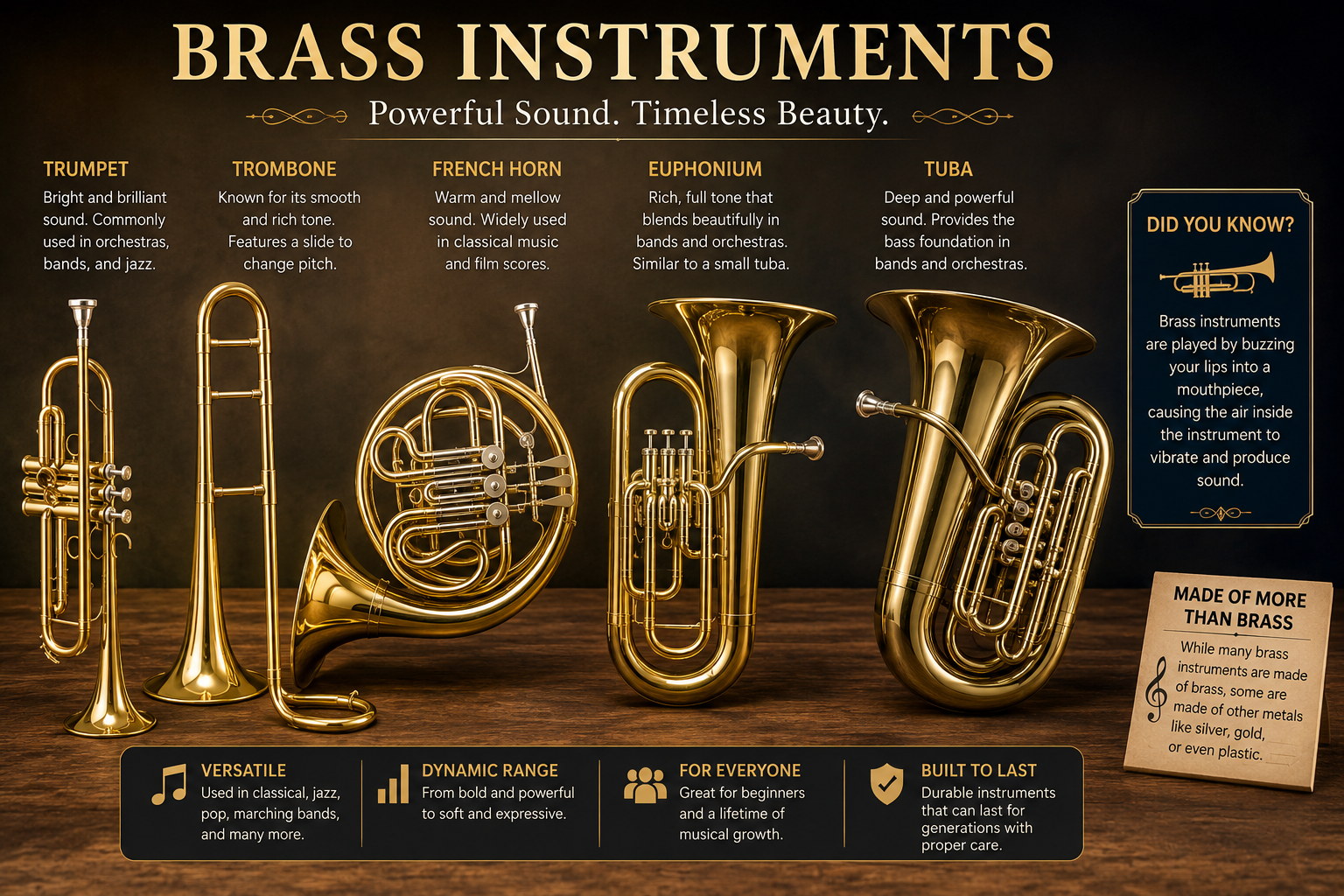
Although the name suggests that these instruments are simply made from brass, that’s not entirely true. What actually defines a brass instrument is the way sound is produced. Players create vibrations by buzzing their lips into a mouthpiece, and those vibrations travel through the instrument to produce different notes. This unique playing technique gives brass instruments their distinctive sound and character.
In this guide, we’ll explore everything you need to know about brass instruments, including their history, different types, how they work, their role in various music genres, maintenance tips, and advice for beginners. Whether you’re a student, musician, or simply someone who enjoys learning about music, this article will help you understand why brass instruments continue to play such an important role in the musical world.
What Are Brass Instruments?
Brass instruments belong to one of the main families of musical instruments. Unlike string or woodwind instruments, they produce sound when the player vibrates their lips against a specially designed mouthpiece. The vibration creates sound waves that travel through the tubing of the instrument before exiting through the bell. This simple yet effective design allows musicians to create a wide range of notes and dynamic expressions.
One interesting fact is that not every brass instrument is actually made from brass. Some are manufactured using silver, gold-plated materials, or even plastic for educational purposes. Regardless of the material used, an instrument is classified as brass if it produces sound through lip vibration rather than reeds or strings. This often surprises beginners who assume the instrument’s material determines its classification.
Modern brass instruments are carefully engineered to produce accurate pitch, excellent resonance, and comfortable playability. Features such as valves, slides, and mouthpiece designs allow players to reach different notes while maintaining consistent sound quality. These innovations have made brass instruments suitable for both professional performances and beginner education.
The History of Brass Instruments
The history of brass instruments stretches back thousands of years. Ancient civilizations used simple horns made from animal horns, shells, wood, and metal for communication, religious ceremonies, and military signals. These early instruments produced only a limited number of notes but served practical purposes long before they became musical tools.
As metalworking techniques improved, instrument makers developed longer tubes and more refined designs that allowed greater musical expression. During the Renaissance and Baroque periods, brass instruments became increasingly popular in royal courts, churches, and ceremonial events. Trumpets and trombones were particularly valued for their powerful projection and impressive sound.
The Industrial Revolution marked a significant turning point in brass instrument development. The invention of valves during the nineteenth century dramatically expanded the musical possibilities of instruments such as the trumpet, French horn, euphonium, and tuba. These innovations allowed musicians to perform complete scales and more complex compositions, paving the way for modern orchestras and bands.
Common Types of Brass Instruments
The trumpet is perhaps the most recognizable brass instrument. Known for its bright, clear, and energetic sound, it plays an important role in orchestras, jazz bands, marching bands, and pop music. Its ability to perform both powerful fanfares and delicate melodies makes it one of the most versatile brass instruments available.
The trombone stands out because it uses a slide instead of valves to change pitch. This unique design allows players to create smooth note transitions that are difficult to achieve on other brass instruments. Trombones are commonly featured in orchestras, jazz ensembles, concert bands, and brass groups due to their warm yet commanding tone.
The French horn, euphonium, and tuba complete the core brass family. The French horn is admired for its smooth and expressive sound, making it a favorite in classical music. The euphonium produces a rich, warm tone often heard in concert bands, while the tuba provides the deep bass foundation that supports the entire brass section. Together, these instruments create a balanced and powerful musical experience.
How Brass Instruments Produce Sound
Playing a brass instrument begins with proper breathing. Musicians use controlled airflow from the diaphragm while buzzing their lips into the mouthpiece. The buzzing creates vibrations that resonate throughout the tubing of the instrument, producing sound that is amplified by the bell.
Changing notes requires adjustments in lip tension, airflow, and instrument mechanics. On valved instruments such as the trumpet and tuba, pressing different valve combinations changes the length of the tubing. On the trombone, moving the slide alters the tube length to create different pitches. These mechanisms allow musicians to perform complete musical scales with remarkable precision.
Tone quality depends on more than just the instrument itself. A player’s breathing technique, embouchure, posture, and consistent practice all contribute to producing a beautiful sound. Experienced musicians develop precise control over these factors, enabling them to perform everything from soft lyrical passages to powerful orchestral climaxes.
The Importance of Brass Instruments in Different Music Genres
Brass instruments play a significant role in classical music, where they contribute both power and emotional depth. Orchestras rely on trumpets, trombones, French horns, and tubas to provide dramatic moments, rich harmonies, and strong musical climaxes. Composers have long used brass sections to create excitement and grandeur within their works.
Jazz music showcases another side of brass instruments. Trumpeters and trombonists often perform expressive solos filled with creativity and improvisation. The flexibility of brass instruments allows jazz musicians to experiment with rhythm, articulation, and tone, making them central to many legendary performances throughout music history.
Beyond classical and jazz, brass instruments appear in marching bands, military bands, pop music, film scores, and even video game soundtracks. Their ability to project sound over large audiences makes them ideal for outdoor performances, while their emotional range allows composers to create memorable musical moments across many entertainment genres.
Tips for Learning a Brass Instrument
Choosing the right instrument is one of the first decisions every beginner should make. Younger students often start with the trumpet because of its manageable size, while older learners may choose the trombone, euphonium, or French horn depending on their musical interests. Selecting an instrument that matches personal goals makes the learning process more enjoyable.
Developing proper breathing habits is essential for success. Brass playing relies heavily on steady airflow and breath control rather than simply blowing harder. Regular breathing exercises help improve endurance, tone quality, and overall performance, allowing players to practice longer without excessive fatigue.
Consistency is more important than lengthy practice sessions. Practicing for twenty to thirty minutes each day often produces better results than several hours of occasional practice. Working with a qualified instructor can also accelerate progress by helping students develop correct techniques from the beginning and avoid common mistakes.
Caring for Your Brass Instrument
Regular cleaning is essential for maintaining both appearance and performance. Moisture naturally builds up inside the instrument during playing, so emptying water keys and cleaning the tubing helps prevent corrosion and keeps airflow unrestricted. A clean instrument also produces better sound and lasts much longer.
Valves and slides require proper lubrication to function smoothly. Using the recommended valve oil or slide grease reduces wear and ensures consistent performance during practice and concerts. Neglecting this maintenance can lead to sticking mechanisms that make playing difficult.
Safe storage is equally important. Keeping the instrument inside a sturdy protective case when not in use protects it from accidental dents, scratches, and environmental damage. Avoid exposing brass instruments to extreme temperatures or excessive humidity, as these conditions may affect both the finish and overall performance.
Why Brass Instruments Continue to Inspire Musicians
Despite advances in digital music technology, brass instruments remain as relevant today as ever. Their authentic sound, expressive capabilities, and powerful presence simply cannot be fully replicated by electronic alternatives. Live brass performances continue to captivate audiences with their energy and emotional impact.
Musicians appreciate brass instruments because they offer endless opportunities for growth. Beginners can enjoy learning simple melodies, while advanced performers explore challenging orchestral works, jazz improvisation, and solo performances. The journey of mastering a brass instrument is both rewarding and deeply satisfying.
Communities around the world continue to celebrate brass music through school bands, professional orchestras, community ensembles, and international competitions. These opportunities encourage musicians of all ages to develop their skills while sharing their passion for music with others.
Conclusion
Brass instruments have earned their place as one of the most influential families of musical instruments. Their rich history, unique playing technique, and remarkable versatility make them an essential part of nearly every major musical tradition. From orchestras and jazz clubs to marching bands and film studios, brass instruments continue to shape the sound of music around the world.
Whether you’re considering learning an instrument, expanding your musical knowledge, or simply appreciating the craftsmanship behind these remarkable creations, understanding brass instruments offers a deeper appreciation for their role in music. With proper care, regular practice, and dedication, these instruments can provide a lifetime of enjoyment and artistic expression.
As music continues to evolve, brass instruments remain timeless. Their powerful voices, expressive range, and enduring popularity ensure they will continue inspiring musicians and audiences for generations to come.
You May Also Read: External Hard Drive